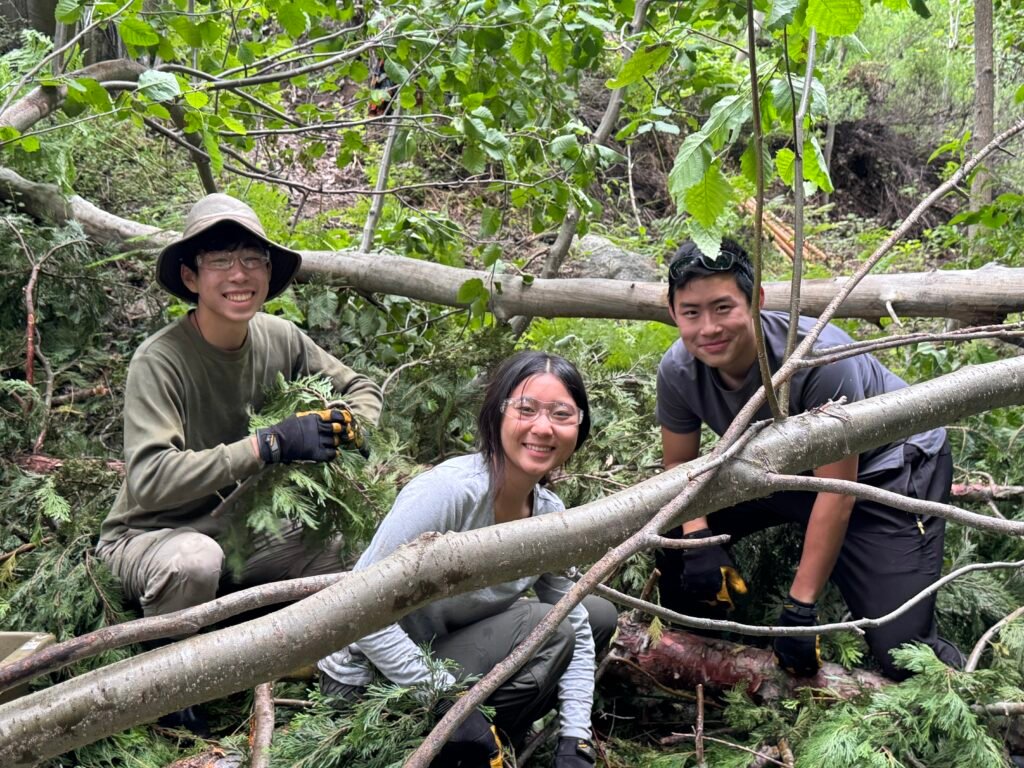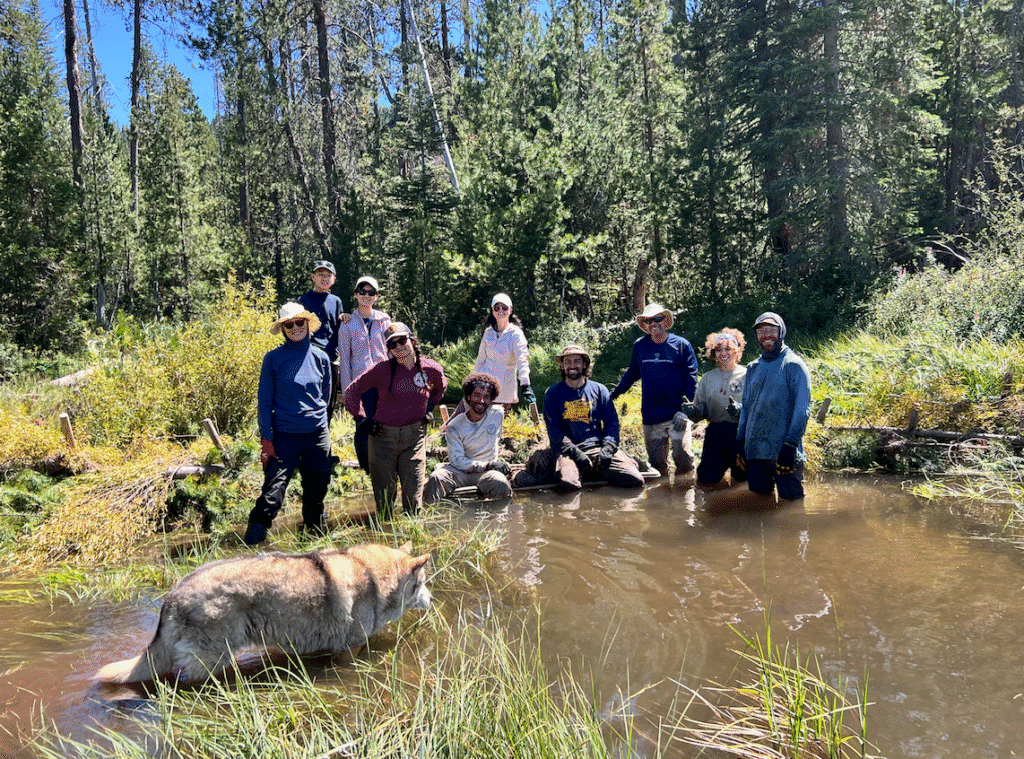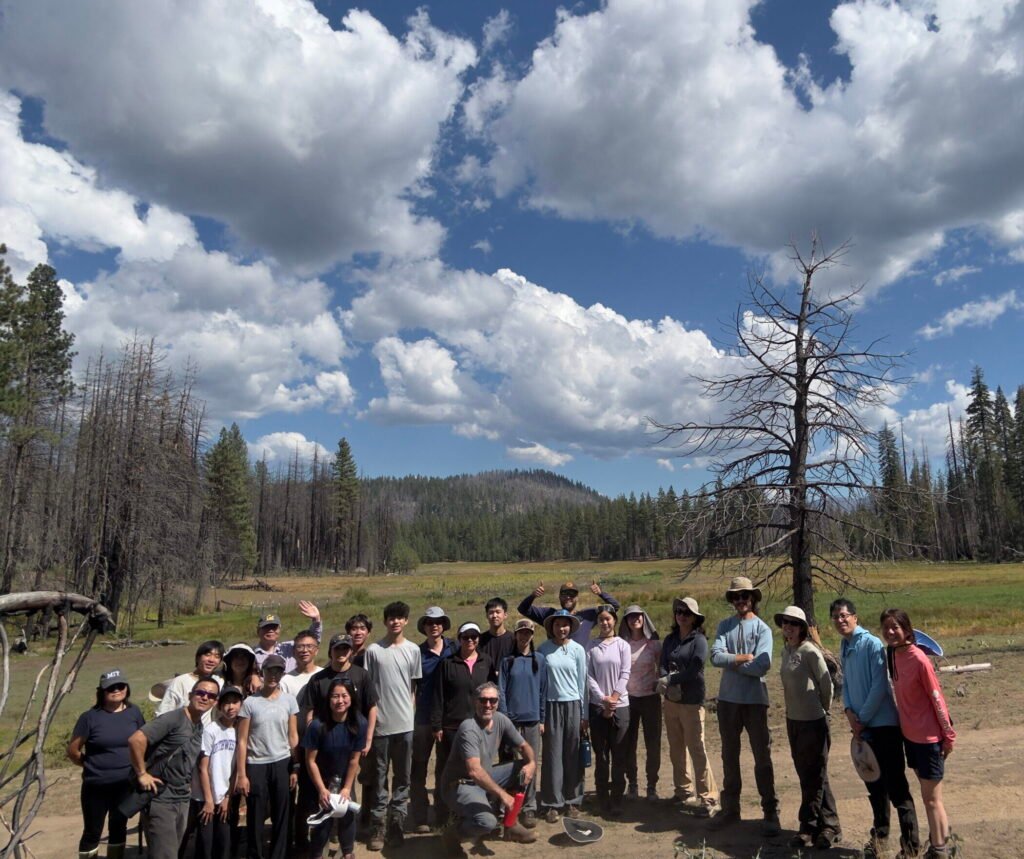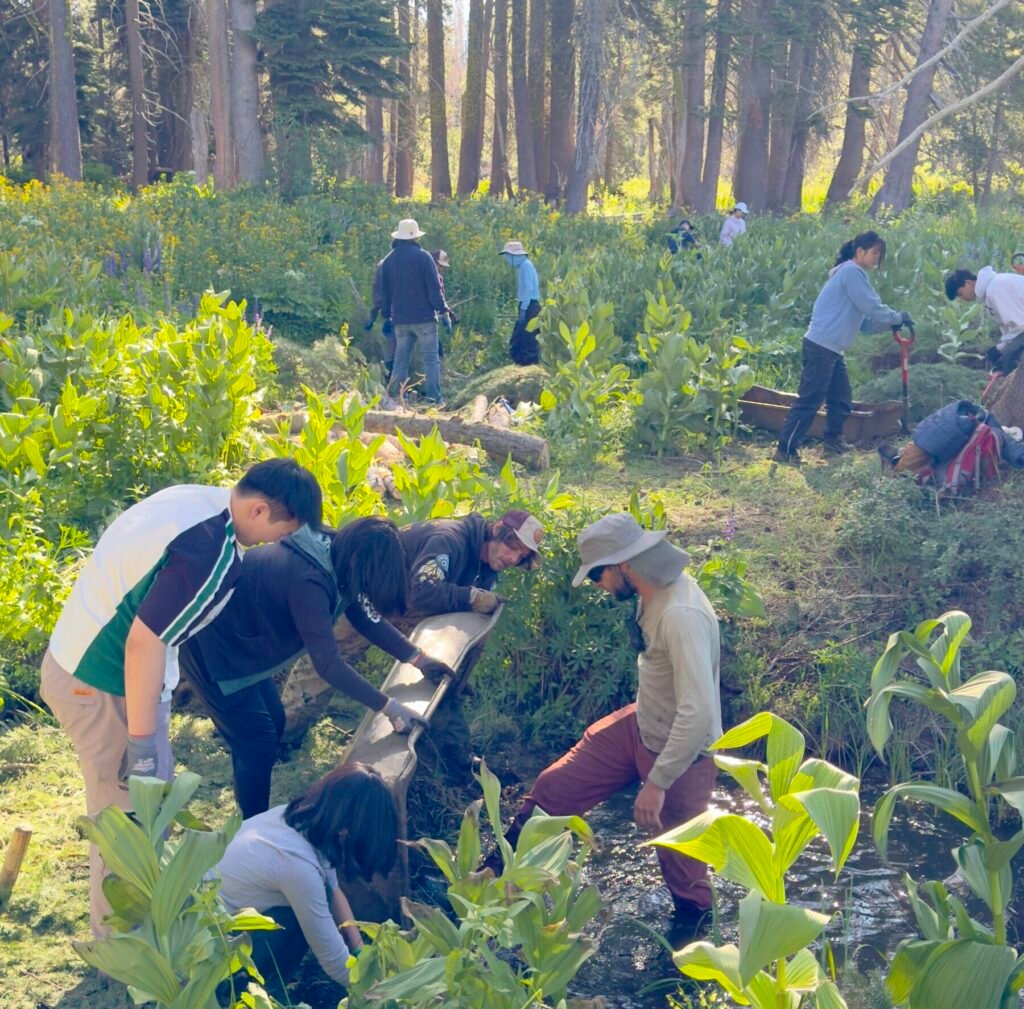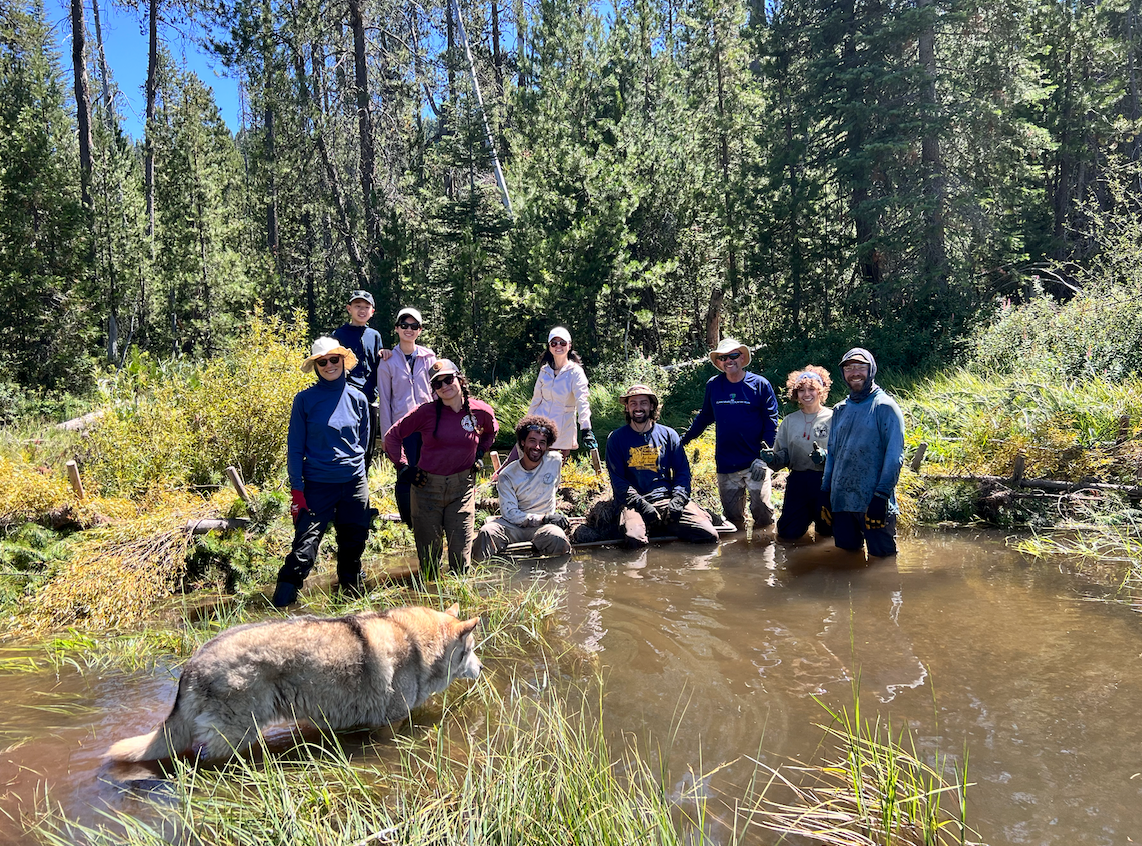
After a 4.5 hour drive from the Bay Area, my family reached Child’s Meadows beside Lassen Volcanic National Park. On August 4, we met the Symbiotic Restoration crew and walked through the meadow before reaching the worksite, which had cool, above-knee water where we worked for roughly five hours. We were the only family with children on site, joined by several other volunteers.
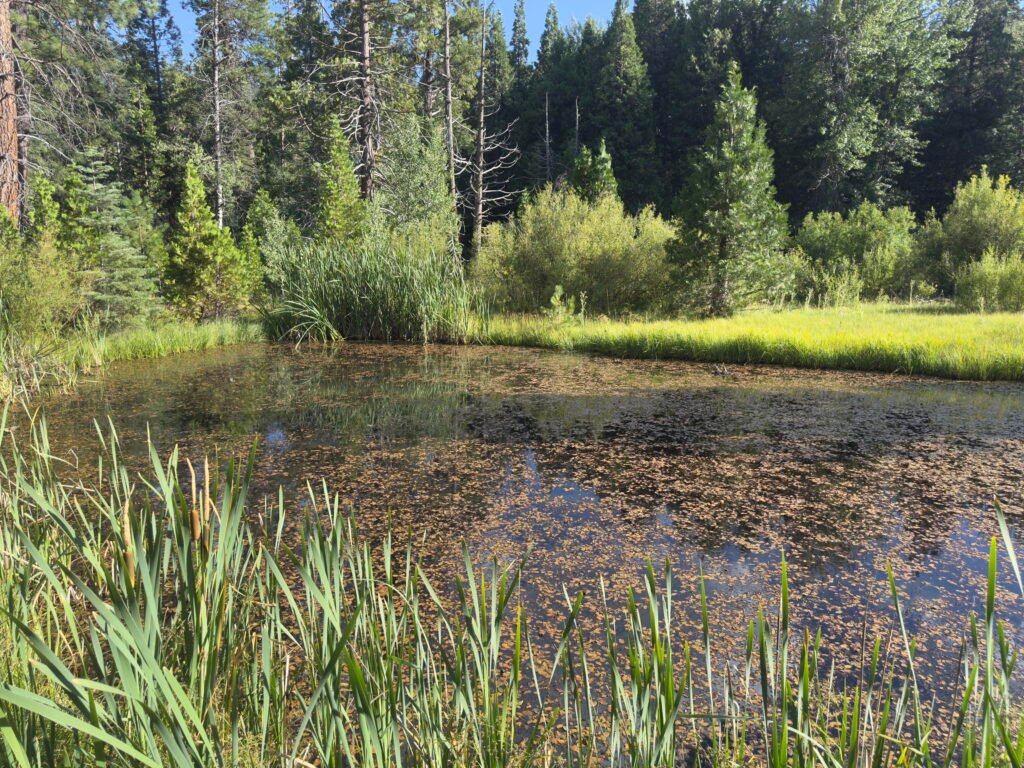
Child’s Meadows sits where the Sierra Nevada meets the Cascade Range and forms the headwaters of Deer Creek, a key system that is a critical salmonid watershed. Historic grazing practices, ditching, roads, timber harvest, and the loss of beaver have produced channel incision, headcutting, conifer encroachment, and desiccation of peat soils. Recent fires have added further stress to the system.

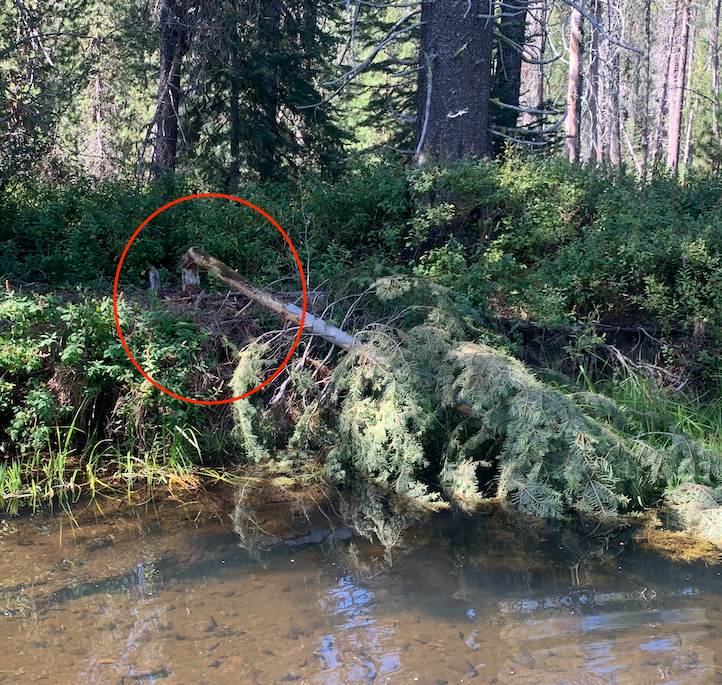
Evidence that beavers were busy at work at Child's Meadows. Distinctive, clean, knife-like cuts at 45-degree angles are found on tree stumps created by the riparians gnawing on trees for wood to build dams and lodges.
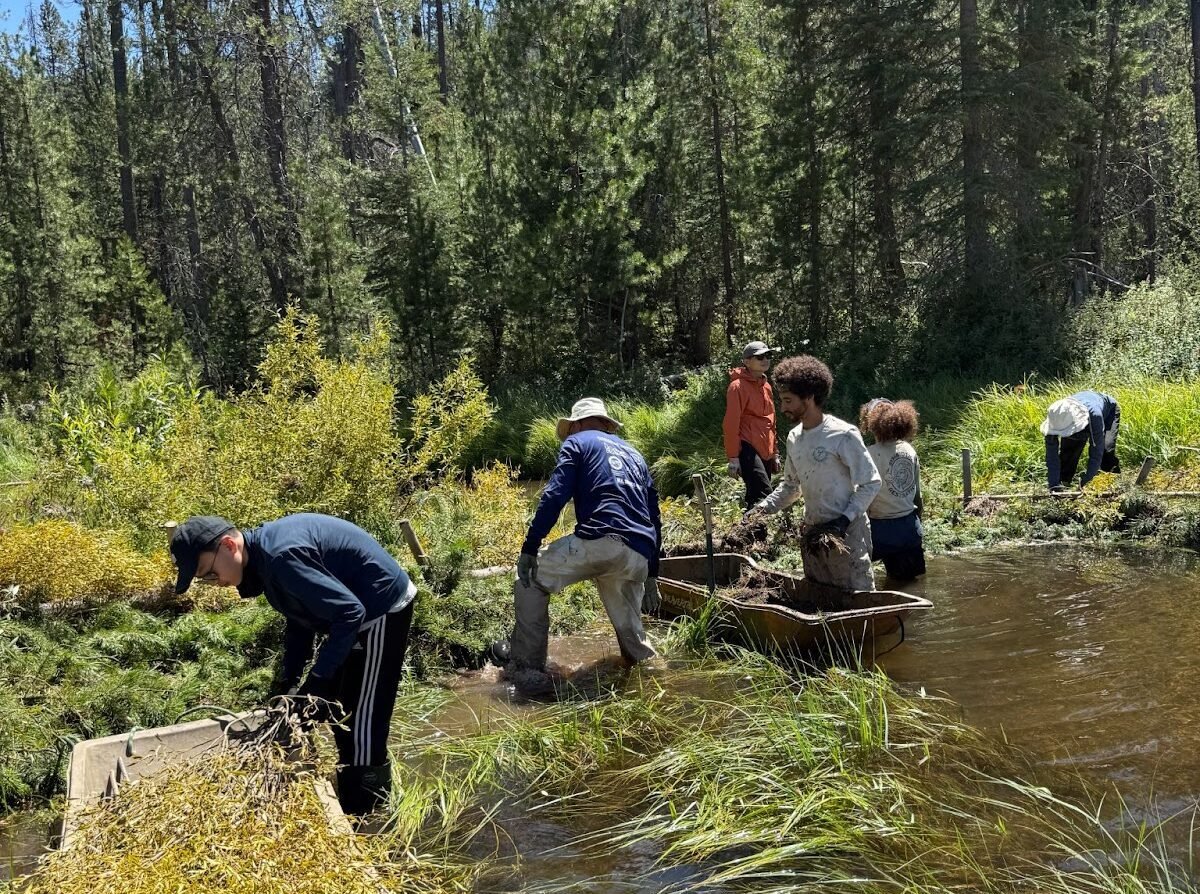
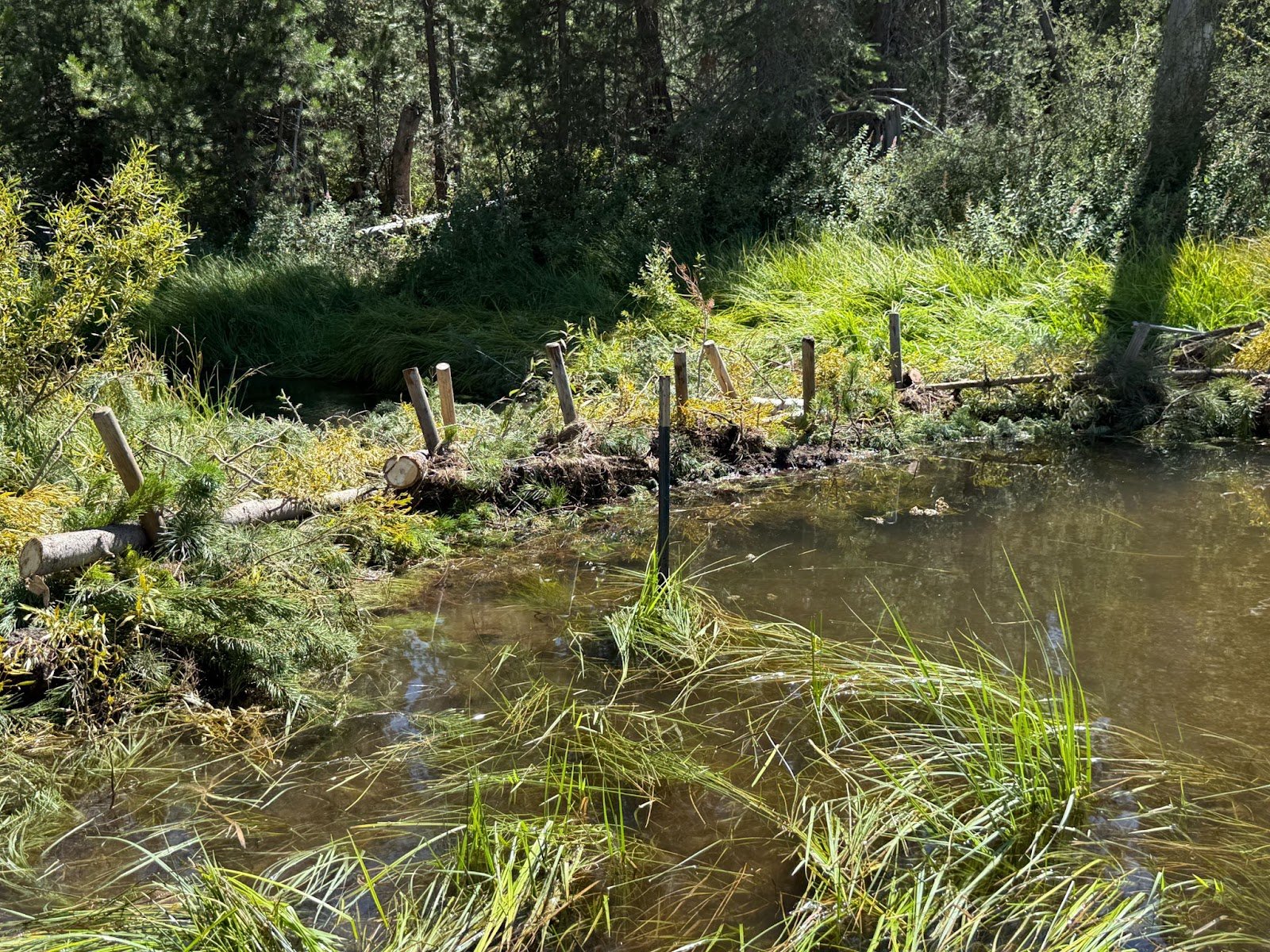
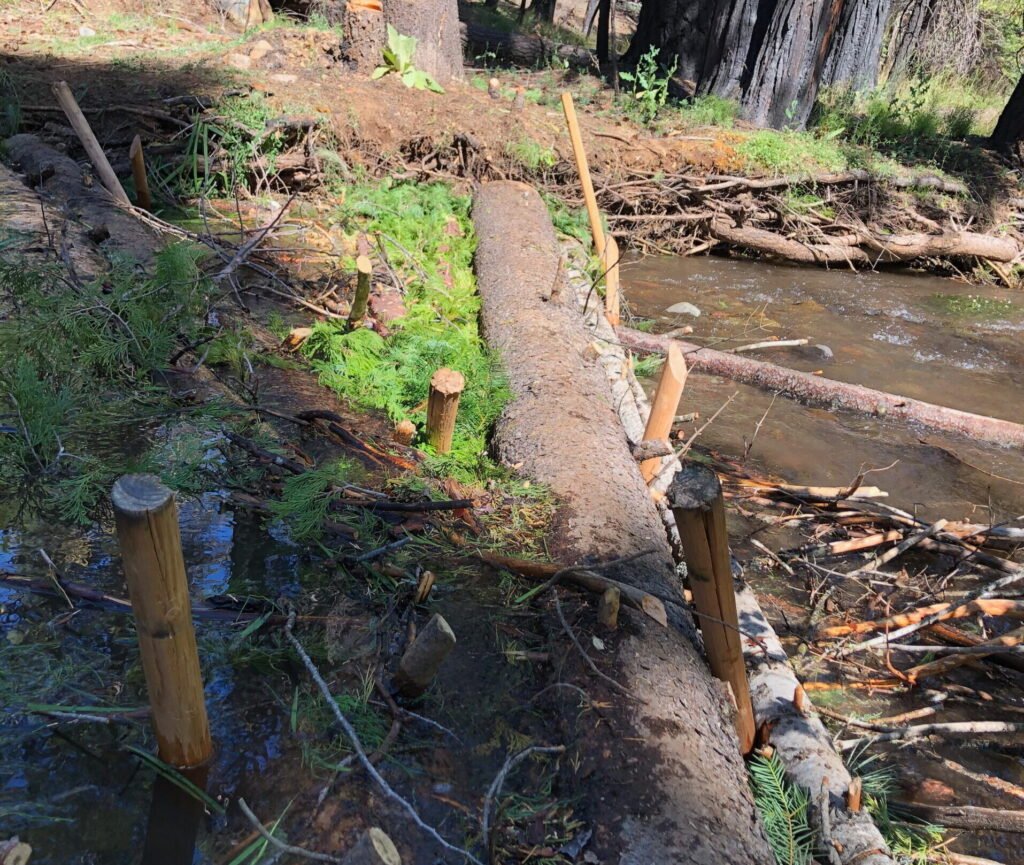
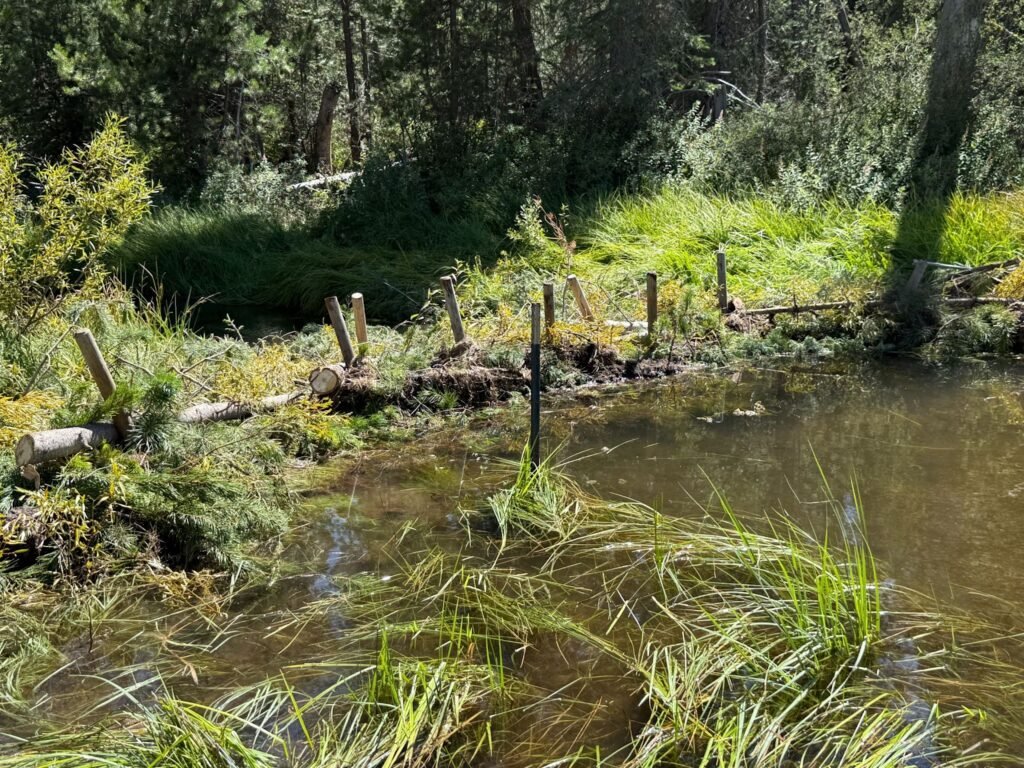
Our task for the day was to reinforce an existing hybrid of a PALS and a BDA. PALS (post-assisted log structures) use driven posts and large logs to force flow deflection, promote large woody debris (LWD) accumulation, and add geomorphic complexity with high structural resistance to peak flows. On the other hand, BDAs (beaver dam analogs) are permeable, with woven features of smaller woody material, vegetation, and sediment that distribute flow laterally and raise local water surface elevation. At our site, we added large logs, then densely packed long branches of willow and conifer branches that we harvested nearby.
At midday, my family and I sat in the meadow to enjoy lunch. Despite the bright sun overhead, the temperature was bearable and a light breeze moved through the grasses. Before heading back to the water, we also took the time to explore the open field. We didn’t spot any beavers, but Chris–the operations manager from Symbiotic Restoration–pointed out a tree that had clearly been felled by one. Since beavers are mostly nocturnal, he explained, seeing one during the day would be rather rare.
By mid-afternoon, the current upstream had slowed, and the waterline had climbed a few inches to mid-thigh. We packed up wet and tired but happy, confident the PALS-BDA complex we reinforced will enhance groundwater recharge, buffer temperature extremes, and support riparian recovery. We left with new friends and a hope to return in coming years and see the work settling in.
Questions? Email us at:
admin@ecoengineeringinaction.com
Read More

Cosumnes River Post-Wildfire Water Quality Monitoring