By Kiefer Chow. In Honor of Earth Day!
April 22, 2026
GUIDE TO BEAVER DAM ANALOG CONSTRUCTION
1) Site Selection: Geomorphic & Hydrologic Criteria
Low Stream Gradient: Target reaches with a slope of less than 3%. Steep streams create high-velocity flow which may wash out hand-built structures.
Narrow Channels: Look for naturally constricted points in the floodplain. Shorter dams are easier to build and more stable.
Incised Streams: Beaver Dam Analogs (BDAs) are often used in “gullies” or incised channels to trap sediment and eventually reconnect the stream to its original floodplain.
2) Establish the Base:
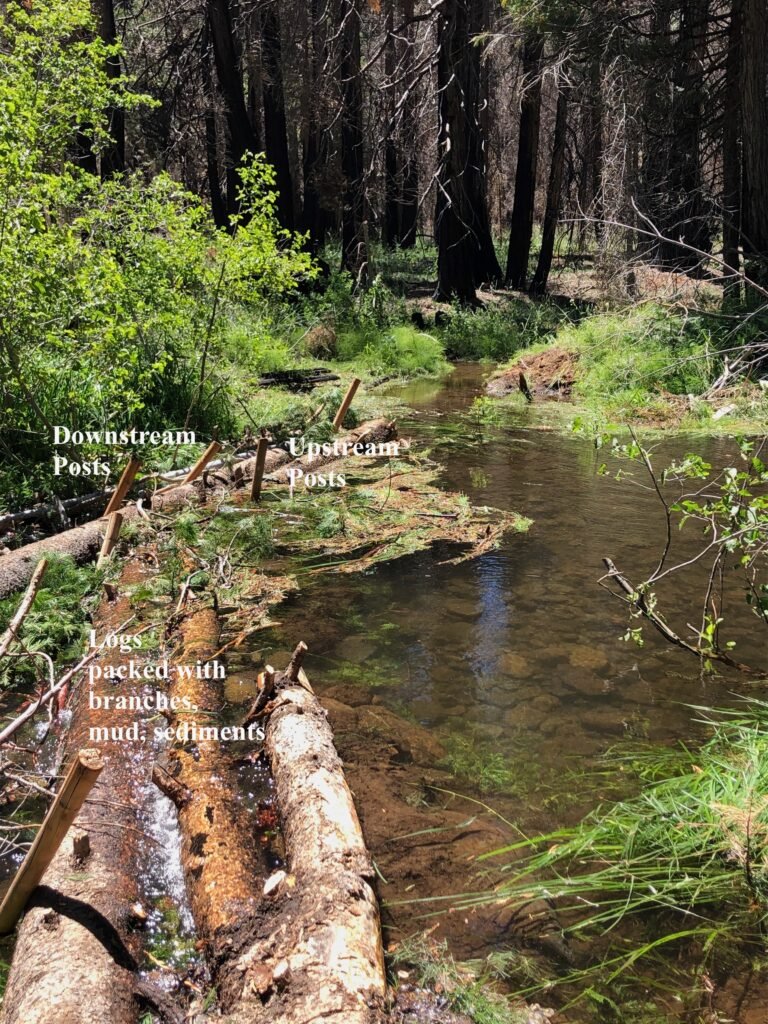
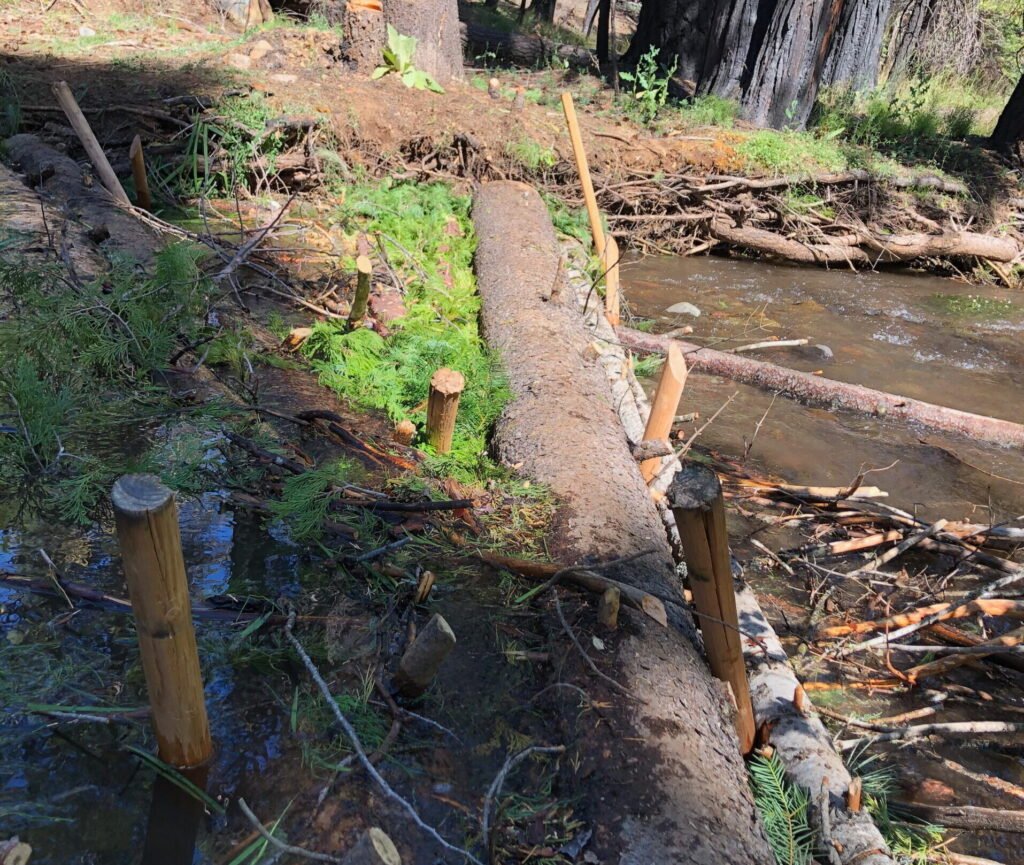
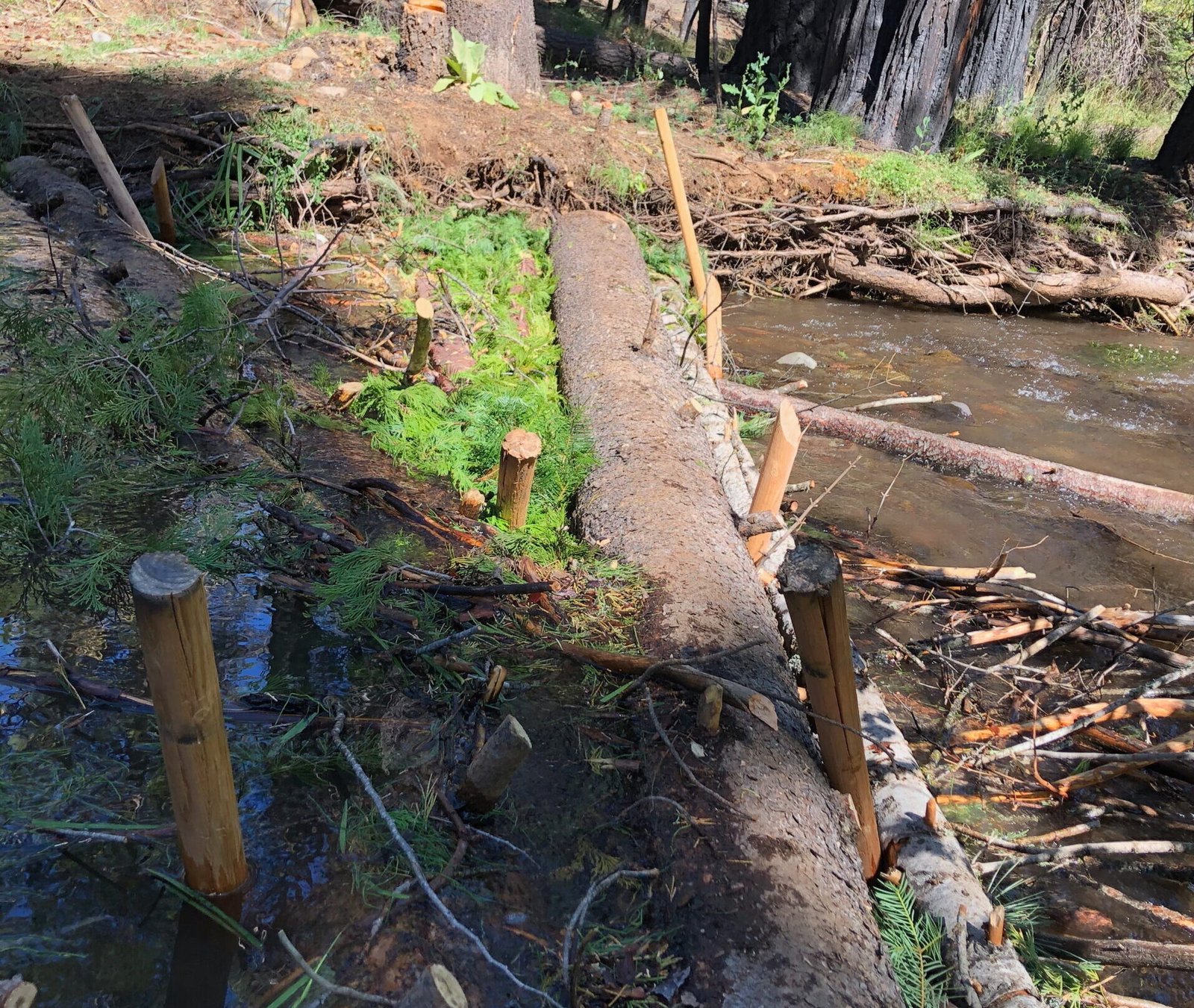
Lay and pack down several large logs from fallen trees on the streambed, perpendicular to the flow.
Secure the base by wedging stems into the rocks to ensure no movement.
3) Weave Woody Material:
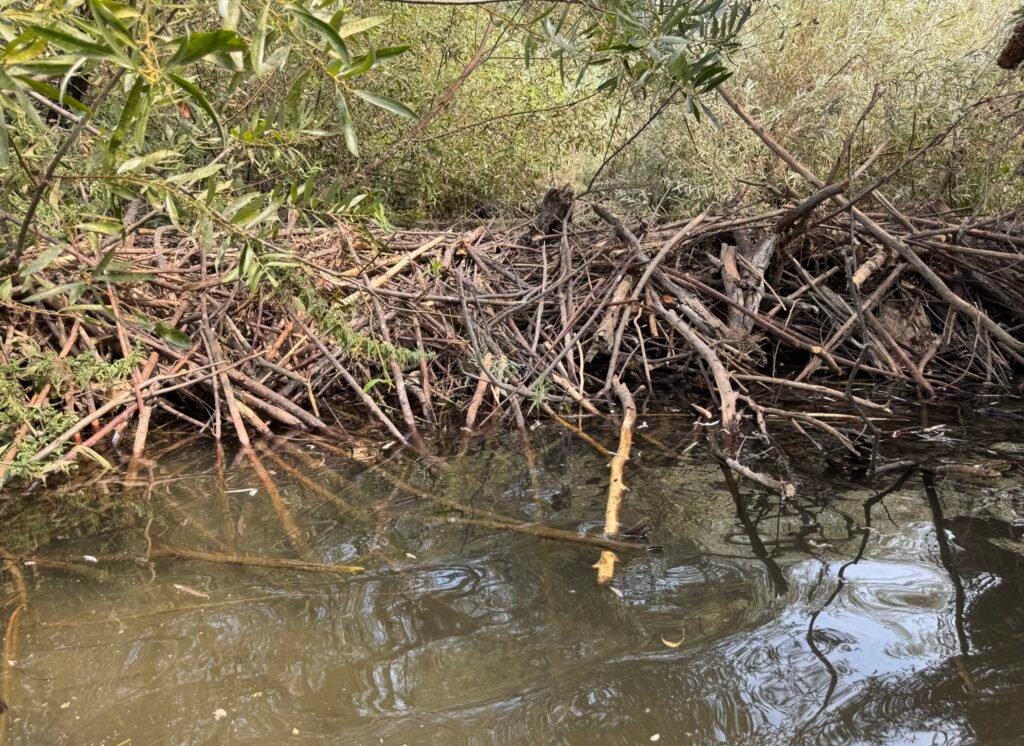
Weave flexible coniferous and leafy branches (like willow or juniper) between the logs until there is no very little water leakage. This will provide superb filtration of silt and sediment evident from crystal clear water downstream of BDA.
Use a “lasagna” method: alternating layers of branches with finer materials like leaves, sedges, or pine needles.
4) Seal and Compact:
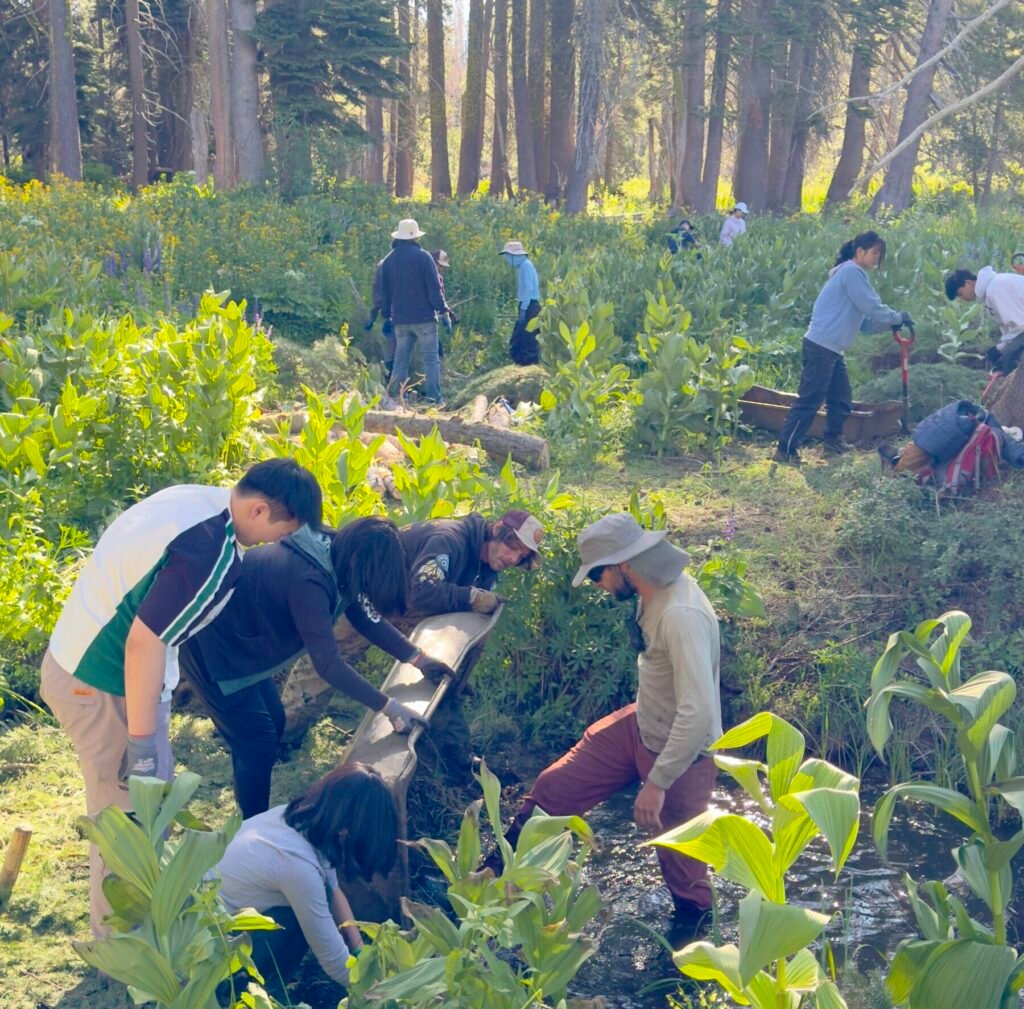
Shovel several barrels of mud, clay, and sediment from the area. Layer against the upstream face of the BDA to reduce porosity
Compact the material by jumping on the sediments and structure to fill gaps
Aim for a 45-degree ramp on the upstream side to encourage water to flow over the crest of the structure.
5) Finish the Crest and Skirt:
Maintain a uniform crest elevation so water spills equally across the top.
Add a “skirt” of branches on the downstream side to act as a debris catch and prevent bed erosion from the overflow.
6) Anchor Posts:
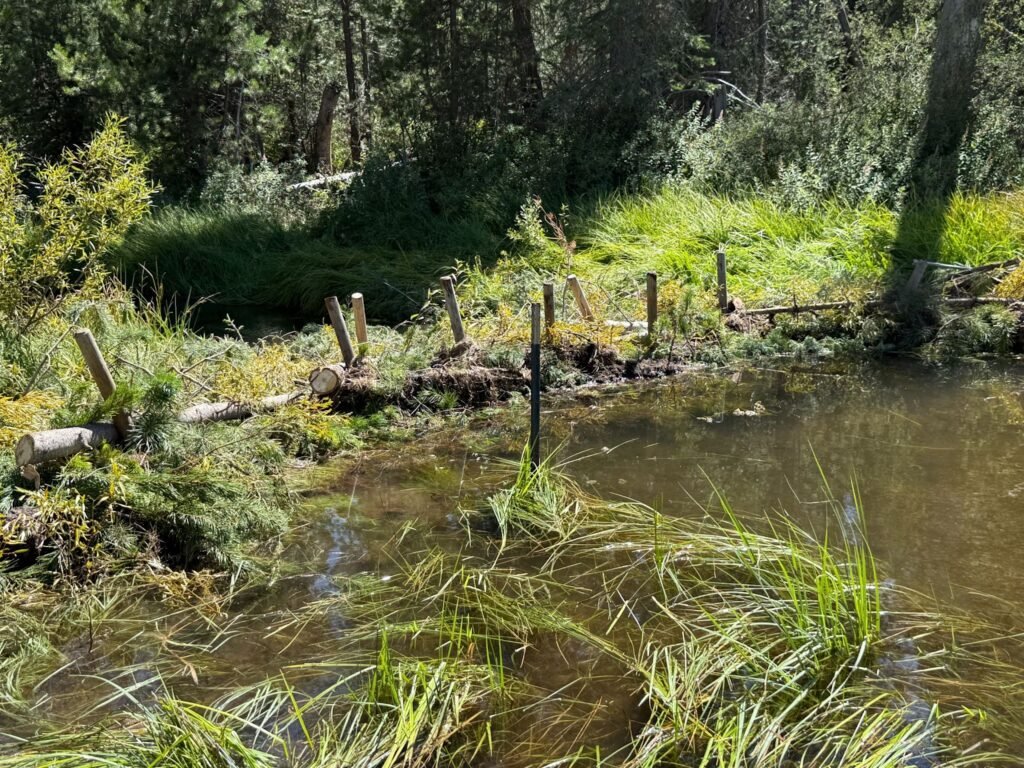
Use a hydraulic pounder to drive untreated wooden posts 2-4 inches in diameter and 6-8 feet long into the stream bed in one or two rows for fast flowing streams.
Depth: Drive posts at least 2–3 feet into the stream bed.
Spacing: Space posts roughly 1 foot apart.
Height: Once driven, posts should not extend more than 3 feet above the active channel bed. (Think structural physics and fluid dynamics. Tall posts create a “lever” effect whereby during a high-flow event, a tall post acts like a long lever arm; the pressure at the top can easily pry it right out of the stream bed mud.)
7) Plant Willows:
Strategic planting ensures beavers have immediate access to their preferred food and building material while feeling safe from predators
The “Goldilocks Zone”: Plant within 100 feet of the creek’s current edge. Beavers rarely forage further than this because they feel vulnerable to predators on land.
Plant in high density clusters to mimic natural thickets and ensure biomass survival.
8) Step Back and Be amazed:
Watch the rapid transformation of rapid-flowing streams into tranquil ponds within hours as water levels rise significantly upstream, flooding adjacent land, creating new marshy habitats and notably clearer water downstream.