Nature’s Blueprint: How Beaver-Inspired Dams Combat Wildfires, Promote Carbon Sequestration, and Recharge Groundwater Storage
By Kiefer Chow. May 18, 2025.
When people think of fire prevention, they often picture hoses, helicopters, and emergency crews. But nature has its own, far quieter defense: beavers. These humble animals create intricate dams that slow down water flow, build wetlands, and increase moisture retention in surrounding landscapes. At Eco-Engineering in Action, we’re taking a page out of nature’s playbook to build similar structures that serve as both ecological lifelines and wildfire buffers.
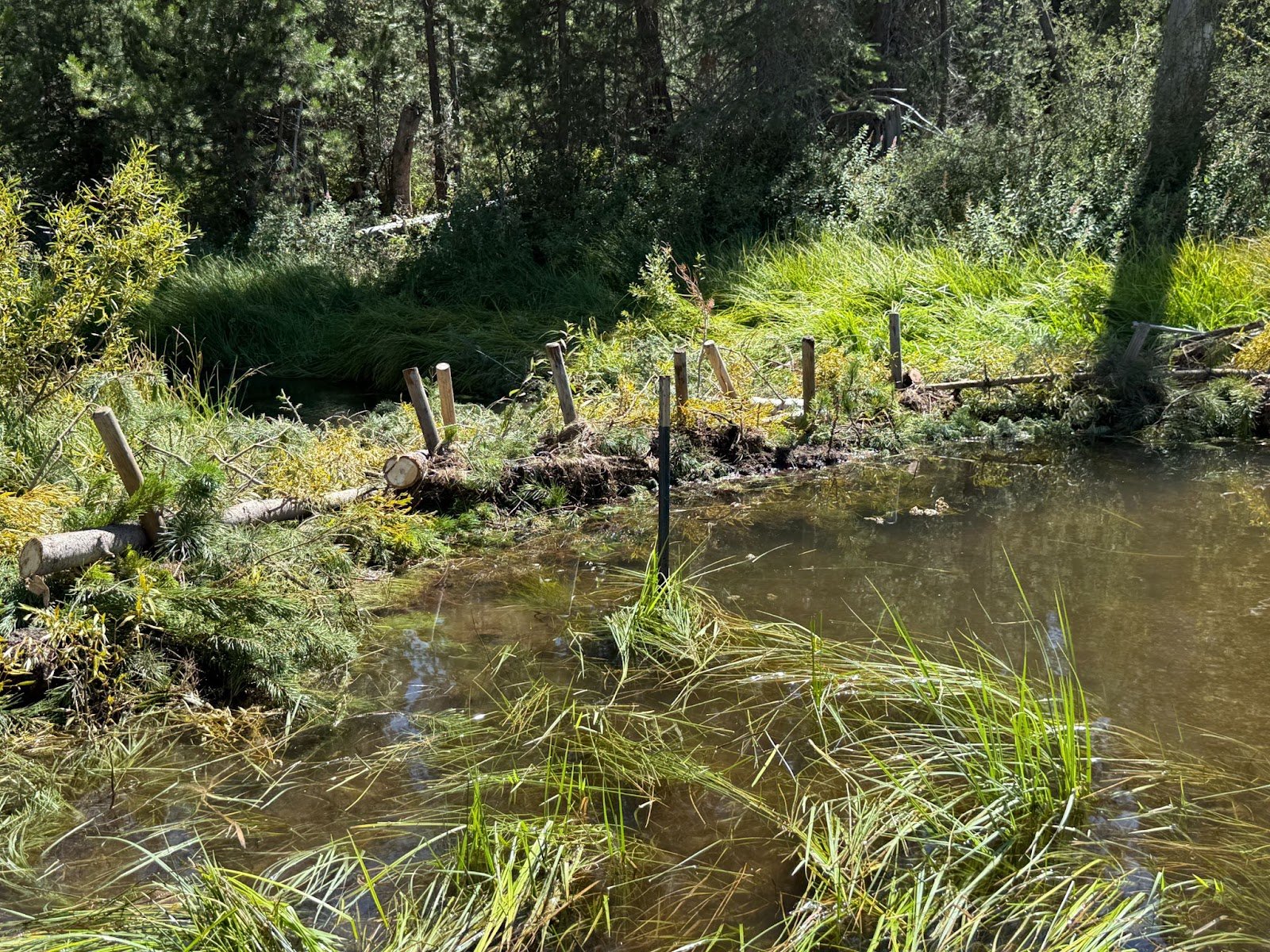
Our beaver dam analogs (BDAs) are built with locally-sourced wood, stone, and soil, mimicking natural beaver constructions. These dams create small wetland pockets that not only support wildlife but also keep vegetation and soil moist, significantly lowering the risk of wildfires spreading rapidly. In regions hit hardest by recurring fires, these systems can mean the difference between containment and catastrophe.
By slowing the flow of water in streams and rivers, BDA’s allow more water to filter into the ground and creating shallow wetlands and expanded floodplains. This expanded moisture supports lusher, more extensive riparian vegetation and further creates rich, carbon-absorbing wetlands. Wetlands and wet meadows are incredibly efficient carbon sinks, storing large amounts of organic carbon in their soil and plant biomass for the long term thus fighting greenhouse gas effects on our climate.
What’s equally powerful is the impact on local ecosystems. Birds, amphibians, and plant life return to these dampened zones, reviving biodiversity in once-scorched areas. The result? A balanced, thriving ecosystem that supports both resilience and regeneration.
We’ve already seen success in our pilot locations, but we want to bring this model to more communities. With greater awareness and continued support, we believe beaver-inspired dams could become an effective tool for restoring our ecosystem. As always, the best solutions often come from simply observing how nature works—and following its lead which is the mission of Ecoegineering in Action.